The Only Beef Caldereta Recipe You Will Ever Need — 7 Secrets to Rich, Thick Stew
By Sofia | Recipe Developer & Food Writer
Prep Time: 20 minutes | Cook Time: 2 hours 30 minutes | Serves: 6 | Difficulty: Medium
FOR MORE RECIPES ENJOY MY PINTEREST ACCOUNT
The recipe of caldereta beef is arguably one of the most beloved stews in Filipino cooking. It is rich, deeply savory, and absolutely built for slow cooking — the kind of dish that turns an ordinary Sunday afternoon into something memorable.
IF YOU LOVE THE <7 Powerful Secrets for beef recipes > DISCOVER IT NOW !!
But here is what most recipes will not tell you: the difference between a mediocre caldereta and an extraordinary one comes down to a handful of very specific techniques. The wrong cut of beef leaves you with dry, stringy meat. Skipping the liver spread makes the sauce taste hollow. And if you do not brown the meat properly before braising, you will never get that deep mahogany color.
UseGround Beef and Rice Skillet for juicier results.
This recipe of beef caldereta solves all of that. Sofia has tested this version dozens of times, adjusting the balance of tomato sauce, liver paste, bell pepper, and braising time to get a stew that is thick, glossy, slightly spicy, and absolutely packed with umami. Whether you are making this for a weeknight dinner, a birthday fiesta, or just craving authentic Filipino beef stew, this is the guide you need.
What is beef caldereta? Caldereta — also spelled kaldereta — is a classic Filipino beef stew made with chunks of braised beef, tomato sauce, liver spread, potatoes, carrots, bell peppers, and olives. The dish originates from Spanish colonial influence and is a staple at Filipino celebrations and family gatherings. The liver paste gives the sauce its signature richness and depth that sets it apart from any other tomato-based beef stew.
FOR MORE BEEF RECIPES ENJOY OUR MEALS WITH HIGH PROTEIN
Why This Beef Caldereta Recipe Works
There are thousands of caldereta beef recipes online. This one earns its place for very practical reasons, not just tradition.
Beef chuck is the correct cut. Chuck has enough intramuscular fat and connective tissue that it breaks down into fall-apart tender pieces after a proper braise. Lean cuts like sirloin or round will tighten and become rubbery. The recipe of caldereta beef begins and ends with choosing the right meat.
The liver spread is non-negotiable. Liver paste — specifically the canned variety used in Filipino cooking — dissolves into the sauce and adds a savory, slightly metallic depth that no amount of fish sauce or soy sauce can replicate. It thickens the stew naturally and gives it that distinct Filipino kaldereta flavor profile.
Browning creates flavor. Every batch of beef goes into a hot pan in a single layer, seared until deeply golden-brown on each side. That Maillard reaction creates hundreds of flavor compounds that you simply cannot achieve by slow-cooking raw meat.
The two-stage sauce build works. Sautéing the aromatics until soft and fragrant, then deglazing with the tomatoes, then adding liquid in two stages gives you layers of flavor rather than a one-dimensional stew.
This approach to the beef caldereta recipe is rooted in practical Filipino home cooking technique — not shortcuts, not fusion, just the method that actually delivers results.
Ingredients
These measurements serve 6 people generously. The recipe of caldereta beef scales well — double everything for large gatherings, and the cooking time only increases by about 20 minutes.
The Beef and Marinade
- 1.5 kg beef chuck, cut into 2-inch cubes (ask your butcher for bone-in pieces for extra richness)
- 3 tablespoons soy sauce
- 1 tablespoon calamansi juice or lemon juice
- 1 teaspoon ground black pepper
Aromatics
- 1 whole head of garlic, minced (about 10 cloves)
- 2 large yellow onions, diced
- 3 tablespoons neutral cooking oil
The Sauce
- 400 g canned crushed tomatoes
- 250 ml tomato sauce (not ketchup — use Filipino-style tomato sauce)
- 165 g canned liver spread, 1 can (Reno or Clara Olé brand — the most important ingredient)
- 2 cups beef broth
- 2 tablespoons fish sauce
- 1 tablespoon sugar (optional, to balance acidity)
Vegetables and Finishers
- 3 medium potatoes, cut into quarters
- 2 medium carrots, cut into thick rounds
- 1 large red bell pepper, sliced
- 1 large green bell pepper, sliced
- ¾ cup green olives, pitted
- 2 to 3 red chili peppers, sliced (adjust to your heat preference)
- ½ cup grated quick-melt or cheddar cheese (the secret weapon for a creamy finish)
Key Ingredient Note from Sofia: The liver spread is the soul of this recipe of caldereta beef. Do not substitute it with fresh chicken liver unless you are willing to cook and mash it yourself — the flavor profile changes significantly. Canned liver spread dissolves into the sauce seamlessly and gives you that signature kaldereta depth. If you cannot find it at an Asian grocery store, order it online. It is worth it.
Required Equipment
You do not need specialty equipment for this caldereta beef recipe. What matters most is a pot with good heat retention.
- Heavy-bottomed dutch oven or large stockpot
- Wooden spoon or silicone spatula
- Sharp chef’s knife
- Cutting board
- Ladle
- Measuring cups and spoons
A pressure cooker or Instant Pot works as an alternative and cuts total cooking time down to under 60 minutes. Instructions for this adaptation are included in the Variations section below.
IF YOU LOVE THE List of beef dishes DISCOVER IT NOW !!
Step-by-Step Instructions
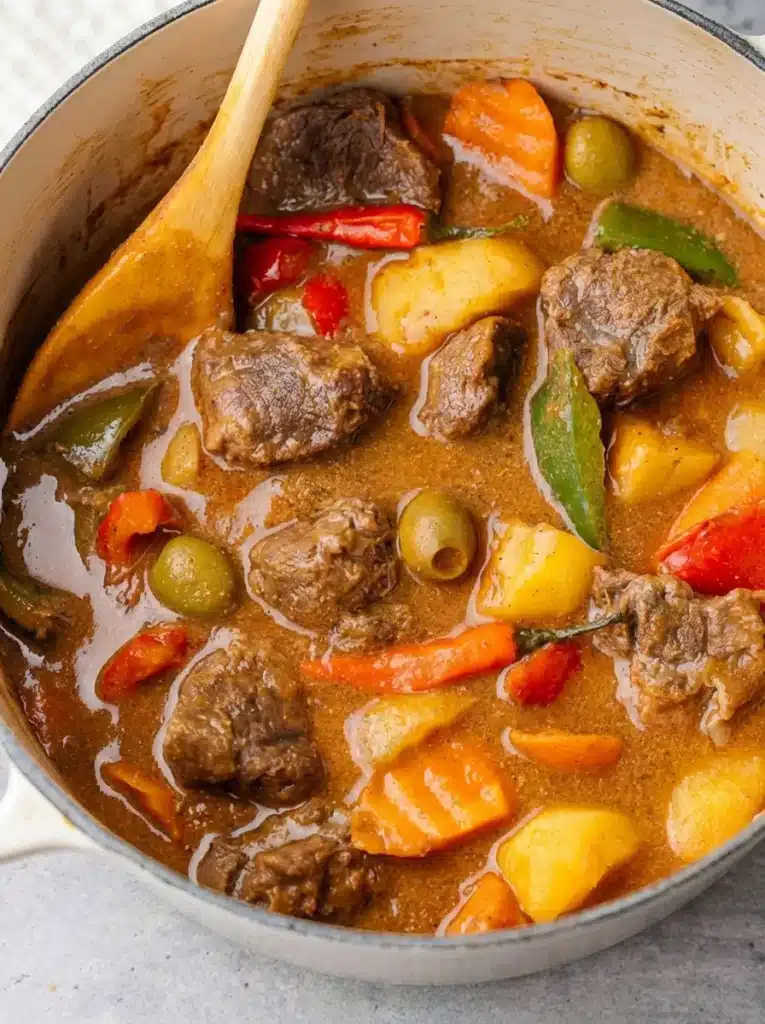
Follow these steps in order. Do not rush the browning stage — that is where 40% of the flavor in this caldereta beef recipe is built.
Step 1 — Marinate the Beef (30 minutes minimum)
Combine the beef cubes with soy sauce, calamansi juice, and black pepper in a large bowl. Toss well to coat every piece. Let it marinate at room temperature for 30 minutes, or cover and refrigerate for up to 4 hours. This step seasons the meat deeply and helps it brown better during searing. Pat the beef completely dry with paper towels before cooking — moisture is the enemy of a good sear.
Step 2 — Sear the Beef Until Deep Golden Brown
Heat 2 tablespoons of oil in your dutch oven over high heat until shimmering and just beginning to smoke. Add the beef in a single layer — work in 2 or 3 batches, never crowd the pan. Sear for 3 to 4 minutes per side without moving, until the pieces develop a dark mahogany crust. Remove each batch to a plate. The brown bits stuck to the bottom of the pot are pure flavor — do not discard them.
Step 3 — Sauté the Aromatics
Reduce heat to medium. Add the remaining oil if needed. Sauté the onions until soft, translucent, and lightly golden, about 5 to 6 minutes. Add the minced garlic and cook another 2 minutes until fragrant and slightly sticky. The onions should be deeply softened, not crunchy — this is the aromatic base of your beef caldereta.
Step 4 — Build the Tomato Base
Add the crushed tomatoes to the pot and use your wooden spoon to scrape up all the browned bits from the bottom — this is the deglazing step and it releases every ounce of flavor from the searing stage. Cook the tomatoes over medium heat for 5 to 7 minutes, stirring occasionally, until they deepen in color and smell intensely rich. Add the tomato sauce and stir to combine.
Step 5 — Return the Beef and Add Braising Liquid
Return all the seared beef to the pot along with any resting juices. Pour in the beef broth and fish sauce. Stir everything together. Bring the mixture to a rolling boil, then immediately reduce the heat to a gentle simmer. Cover the pot partially with a lid — leaving a small gap allows steam to escape and the sauce to concentrate properly.
Step 6 — Braise Low and Slow for 1.5 to 2 Hours
Simmer the beef caldereta on low heat for 1.5 to 2 hours, stirring every 20 minutes to prevent anything from sticking to the bottom. The beef is ready when it is completely tender and yields easily to a fork with no resistance. If the liquid reduces too much before the beef is tender, add another half cup of broth. This is the most important stage of the entire recipe of caldereta beef — patience here is everything.
Step 7 — Add Vegetables and Liver Spread
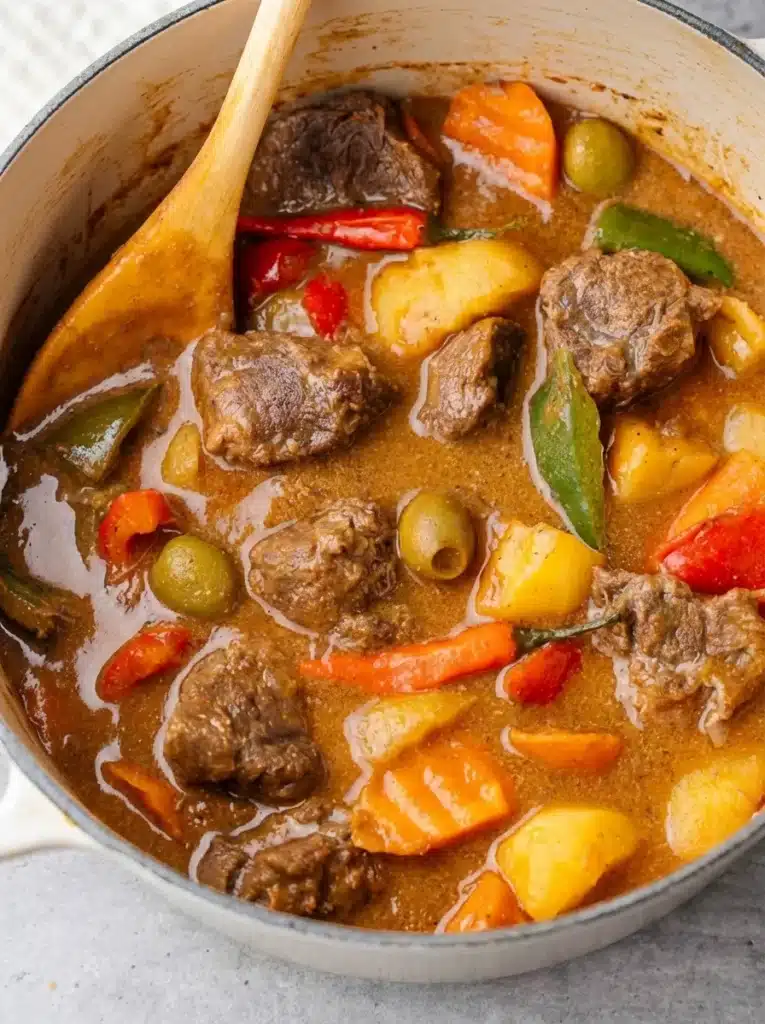
Once the beef is tender, add the potatoes and carrots. Cook uncovered for 15 minutes until the potatoes are fork-tender but still holding their shape. Now stir in the liver spread — add it in small spoonfuls and stir vigorously until it dissolves completely into the sauce. The stew should deepen in color and become noticeably thicker and glossier immediately after adding the liver paste.
Step 8 — Add Bell Peppers, Olives, and Chili
Add the red and green bell peppers, olives, and chili peppers. Cook for another 5 to 7 minutes. You want the bell peppers to be slightly softened but still vibrant in color — not mushy. They provide sweetness and freshness that balances the richness of the liver paste and tomato sauce.
Step 9 — Final Seasoning and Cheese Finish
Taste the sauce and adjust with fish sauce for saltiness, a pinch of sugar if the tomatoes are too acidic, or more chili if you want heat. Turn off the heat and stir in the grated cheese. It will melt within 30 seconds, making the sauce silky, slightly creamy, and beautifully rich. Let the finished caldereta rest for 5 minutes before serving — this allows the sauce to settle and the flavors to meld completely.
Chef Sofia’s Pro Tips for Perfect Beef Caldereta
These are the details that separate a home cook’s caldereta from a restaurant-quality Filipino beef stew. Every single one of them matters.
Tip 1 — Buy chuck with visible marbling. The white streaks of fat running through the beef are not fat to be trimmed — they are flavor and moisture insurance. Lean beef will give you dry, chewy caldereta no matter how long you braise it.
Tip 2 — Never add cold broth to a hot pan. The temperature shock slows down your braise and dilutes the fond. If your broth is refrigerated, warm it briefly in the microwave before adding it to the stew.
Tip 3 — Add the liver spread late. Adding it too early causes it to lose its thickening power and can create a slightly bitter undertone. Stir it in only after the beef is already tender. This is the most common mistake in a caldereta recipe.
Tip 4 — Use a heavy pot. A thin-bottomed pot creates hot spots and will scorch the tomato base. A cast iron dutch oven or heavy stainless stockpot gives you even, consistent heat throughout the entire braise.
Tip 5 — Cook it one day ahead. Like most Filipino braises, caldereta beef tastes dramatically better the next day. The sauce thickens overnight in the refrigerator and the beef absorbs all the surrounding flavors more completely.
Tip 6 — Taste before adding cheese. The quick-melt cheese adds saltiness in addition to creaminess. If your sauce is already on the salty side from the fish sauce and liver spread, reduce the cheese quantity or skip it entirely.
Tip 7 — Let the beef rest before serving. Five minutes off the heat allows the proteins in the braised beef to relax and reabsorb some of the surrounding sauce liquid — the pieces stay moister and the overall texture improves noticeably.
FOR MORE RECIPES ENJOY MY PINTEREST ACCOUNT
Common Mistakes to Avoid When Making Caldereta
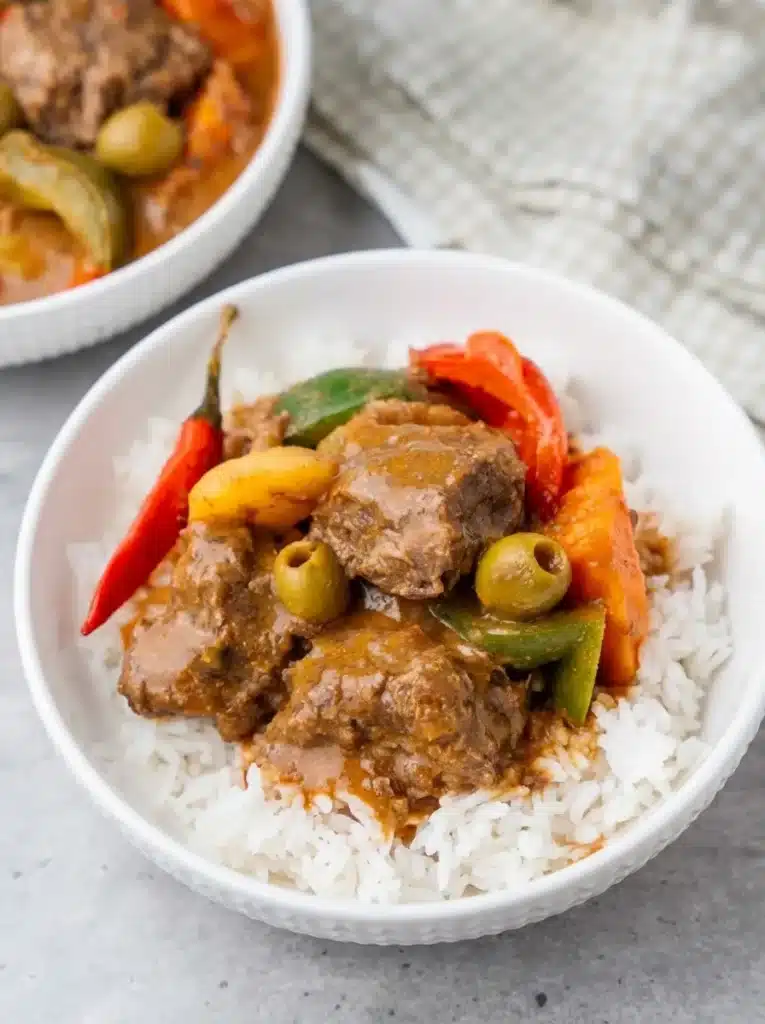
These are the errors Sofia sees consistently when people attempt this recipe of caldereta beef for the first time. Recognizing them in advance saves you from a frustrating outcome.
Mistake 1 — Using the wrong beef cut. Sirloin, tenderloin, or lean stewing beef do not have enough collagen and fat to braise properly. Stick to chuck, short ribs, or shank for authentic Filipino beef caldereta texture.
Mistake 2 — Skipping the sear to save time. This is the most damaging shortcut in any braised beef recipe. You lose all the Maillard flavor, the sauce color is lighter, and the finished stew tastes flat and one-dimensional no matter how long you simmer it.
Mistake 3 — Adding liver spread at the start. Extended cooking breaks down the liver paste and dulls its flavor contribution. It belongs in the final 20 minutes of cooking, not at the beginning.
Mistake 4 — Boiling instead of simmering. A vigorous boil makes braised beef tough. Once you reduce the heat after the initial boil, maintain a lazy, gentle simmer — you should see occasional small bubbles at the surface, nothing more aggressive.
Mistake 5 — Overcrowding the pan during searing. Too much beef at once drops the pan temperature dramatically. The meat steams instead of searing, you lose all the browning, and the entire flavor base of the beef caldereta is compromised before the recipe even begins.
Mistake 6 — Adding bell peppers too early. Bell peppers break down quickly and become mushy and dull-colored if they cook for more than 10 to 12 minutes. Add them only in the final stage of cooking to preserve their texture and bright color.
Mistake 7 — Not tasting and adjusting before serving. The balance of salty, savory, and slightly sweet is what makes a great caldereta recipe. Liver spread, soy sauce, and fish sauce are all salty — taste multiple times and adjust gradually rather than dumping in more seasoning at the end.
Variations and Substitutions
The traditional recipe of caldereta beef is the benchmark, but this dish adapts well to different dietary needs, available ingredients, and cooking setups.
Pressure Cooker Version: Sear the beef in the pressure cooker insert on sauté mode, build the sauce in the same pot, then pressure cook on high for 35 minutes. Natural release for 15 minutes. Add potatoes, carrots, and liver spread after pressure cooking, then simmer uncovered for 10 to 12 minutes. Bell peppers and olives go in last for 5 minutes on sauté mode.
Goat Caldereta (Kalderetang Kambing): This is actually the original version of this recipe. Substitute equal weight of bone-in goat meat for the beef and extend the braising time to 2.5 to 3 hours. Add a splash of vinegar to the braise to help tenderize the more fibrous goat muscle fibers.
No Liver Spread Substitute: If you genuinely cannot source liver spread, substitute with 2 tablespoons of tomato paste plus 1 tablespoon of Worcestershire sauce. The flavor profile will be lighter and less complex, but the sauce will still have reasonable depth. This is strictly an emergency substitution — the authentic beef caldereta recipe calls for liver paste.
Spicy Caldereta: For a hotter version, add 1 to 2 tablespoons of chili garlic sauce along with the tomatoes, and use bird’s eye chili (siling labuyo) instead of milder red chilies. Adjust heat level incrementally — the stew develops more heat as it rests.
Pork Caldereta (Calderetang Baboy): Use pork ribs or pork belly chunks. Reduce the braising time to 45 to 60 minutes. Pork caldereta is slightly milder and sweeter than the beef version and pairs particularly well with the grated cheese finish.
Extra Creamy Version: For a richer, creamier version popular in some Filipino households, stir in 2 to 3 tablespoons of cream cheese or a small block of processed cheese along with the quick-melt cheese. The sauce becomes noticeably thicker and more indulgent.
Storage and Reheating
Beef caldereta is one of those dishes that genuinely improves with storage. The overnight rest in the refrigerator transforms a good stew into a great one as the flavors continue to develop.
Refrigerator: Store in an airtight container for 4 to 5 days. The sauce will thicken considerably as it chills — this is normal and desirable.
Freezer: Freeze in portion-sized containers for up to 3 months. Thaw overnight in the refrigerator before reheating. Do not refreeze after thawing.
Stovetop Reheating (preferred method): Add 2 to 3 tablespoons of water or broth, cover partially, and warm over medium-low heat for 10 to 12 minutes, stirring occasionally. The sauce will loosen and become glossy again.
Microwave Reheating: Cover with a damp paper towel and heat in 90-second increments, stirring between each. Add a splash of water if the sauce looks dry.
Sofia’s Storage Tip: Remove the potatoes if you are planning to freeze the caldereta — they become grainy and unpleasant in texture after freezing and thawing. Make a fresh batch of potatoes when you reheat the stew. Everything else in the beef caldereta recipe freezes beautifully.
Serving Suggestions
This recipe of caldereta beef is designed to be served as the main centerpiece of a Filipino meal. Here is how to build around it properly.
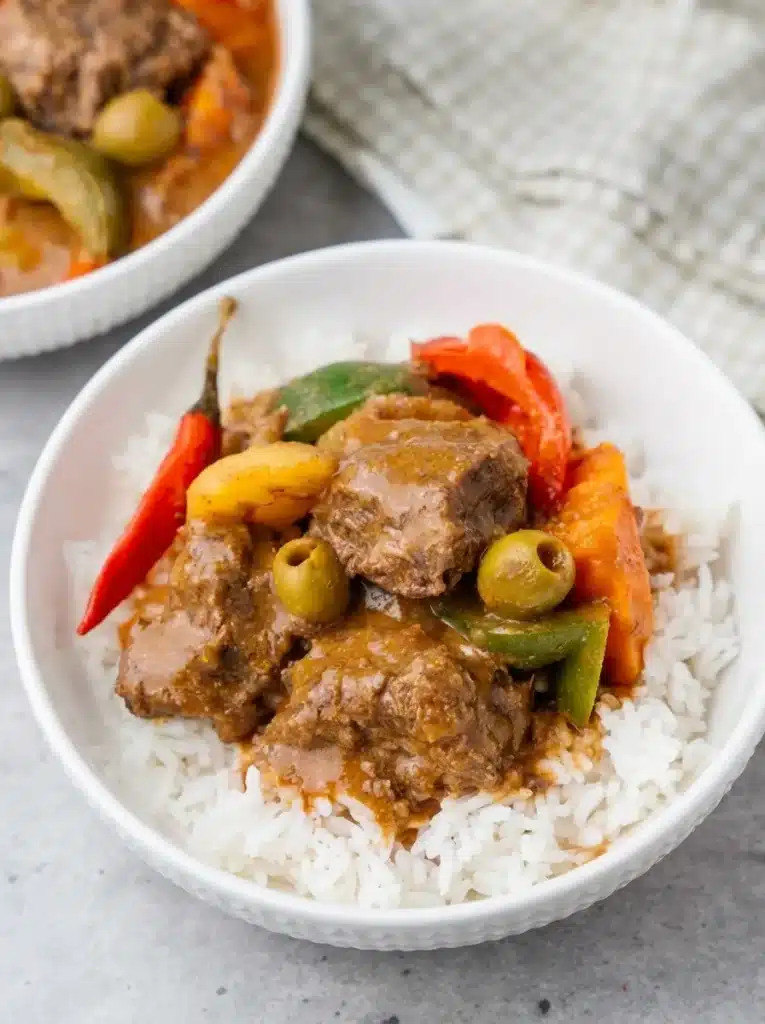
Steamed jasmine rice or garlic fried rice — The sauce-to-rice ratio matters enormously here. Serve the beef caldereta in a generous portion so that every spoonful of rice can pick up sauce. Garlic fried rice (sinangag) is particularly good for leftover caldereta the next morning.
Pandesal (Filipino bread rolls) — Using bread to soak up the thick tomato-liver sauce is an underrated serving approach. The slightly sweet, pillowy rolls balance the savory intensity of the stew beautifully.
Pickled green papaya (atchara) — The bright, tangy acidity of atchara cuts through the richness of the braised beef and resets your palate between bites. A small serving on the side makes the caldereta recipe feel more complete and balanced.
Simple vegetable side — A lightly sautéed kangkong (water spinach) or steamed broccoli keeps the overall meal balanced without competing with the bold flavors of the beef caldereta.
Cold drinks — The slightly spicy, rich profile of kaldereta pairs well with cold beer, iced calamansi juice, or cold water infused with cucumber and mint. Avoid heavy, tannic red wines — they fight the liver-tomato base rather than complementing it.
Nutrition Estimate Per Serving
Based on 6 servings using 1.5 kg beef chuck with all listed ingredients. Values are estimates and vary depending on exact cuts and brands used. Not including rice.
- Calories: 520
- Protein: 46 g
- Total Fat: 28 g
- Carbohydrates: 22 g
- Fiber: 4 g
- Sodium: 890 mg
- Sugar: 12 g
- Cholesterol: 180 mg
Sodium is on the higher side due to soy sauce, fish sauce, and liver spread. Reduce fish sauce by half for a lower-sodium version of this caldereta recipe without significantly affecting the overall flavor.
Frequently Asked Questions
What cut of beef is best for caldereta? Beef chuck is the best cut for a recipe of caldereta beef. It contains enough connective tissue and intramuscular fat to break down into tender, juicy pieces after a 2-hour braise. Bone-in chuck or short ribs also work excellently and add extra body to the braising liquid. Avoid lean cuts like sirloin, round, or flank — they become dry and stringy when slow-cooked for extended periods.
Can I make beef caldereta without liver spread? You can make a tomato-based beef stew without liver spread, but it will not technically be a proper caldereta. The liver paste is what creates the dish’s signature thick, deeply savory sauce and sets Filipino kaldereta apart from Spanish-style beef stews. If you cannot find canned liver spread, try Asian grocery stores or order it online. As an emergency substitute, use 2 tablespoons tomato paste plus 1 tablespoon Worcestershire sauce, understanding that the flavor will be noticeably different.
Why is my caldereta sauce watery? A watery caldereta sauce is usually caused by one of three things: not reducing the sauce enough during the braising stage, adding too much liquid, or adding the liver spread too early which reduces its thickening effect. To fix a thin sauce, remove the lid entirely and increase heat to medium, letting the excess liquid evaporate. Stir in a small amount of additional liver spread if needed. The sauce should coat a spoon thickly before serving.
How long should I cook beef caldereta?
The recipe of caldereta beef requires 1.5 to 2 hours of low simmering for the beef to become truly tender. Total time from start to finish is about 2.5 to 3 hours including prep and the vegetable stage. In a pressure cooker, the beef cooks in 35 minutes on high pressure. Do not rush the stovetop version — the extended braise is what develops the deep flavor and the signature fall-apart beef texture.
What is the difference between caldereta and mechado?
Both are Filipino braised beef dishes with tomato-based sauces, but they are distinctly different. Beef caldereta uses liver spread as a key ingredient, giving the sauce depth and a characteristic thickness. It also typically includes bell peppers, olives, and potatoes. Mechado is lighter, uses a soy sauce and tomato base, and does not use liver paste. The beef in mechado is often larded with pork fat before cooking, giving it a different texture and flavor profile entirely.
Can I make caldereta in advance?
Yes — and you absolutely should. Caldereta beef recipe results improve dramatically after 24 hours in the refrigerator. Make it the day before, cool it completely at room temperature for no more than 2 hours, then refrigerate in an airtight container. The sauce thickens, the beef absorbs more flavor, and the overall dish tastes more cohesive. Reheat gently on the stovetop with a small splash of water or broth to loosen the sauce.
Why does my beef caldereta taste bitter?
Bitterness in a caldereta usually comes from one of two sources: over-cooked garlic (burnt garlic turns bitter very quickly) or adding too much liver spread before it is fully integrated into the sauce. Always cook garlic on medium heat, never high, and stop when it becomes fragrant rather than brown. Add liver spread gradually and stir thoroughly between additions to allow it to melt into the sauce before tasting for balance.
Is beef caldereta the same as beef stew?
Beef caldereta is a specific type of Filipino braised beef stew — it is not the same as Western-style beef stew. The key differences are the liver paste unique to Filipino caldereta, the tomato sauce base, the use of fish sauce for seasoning, the olives and bell peppers, and the optional melted cheese finish. Western beef stew typically uses a brown gravy or wine-based sauce and does not include any of these Filipino-specific ingredients.
Final Thoughts
The recipe of caldereta beef is one of those dishes that rewards patience and proper technique above everything else.
If you follow this guide — marinate the beef, sear it properly, build the tomato base carefully, braise it low and slow, and add the liver spread at the right moment — you will have a pot of Filipino beef caldereta that is genuinely restaurant-worthy. The kind that fills the kitchen with a deep, savory aroma that makes everyone wander in asking when dinner will be ready.
The seven secrets in this article are not complicated. They are simply specific. Specific about the cut of beef, specific about the timing of the liver spread, specific about maintaining a gentle simmer rather than a rolling boil. These are the details that separate a memorable caldereta from a forgettable one.
Make it once and you will understand why this beef caldereta recipe has been a centerpiece of Filipino celebrations for generations. Make it twice and you will make it your own.
— Sofia, Recipe Developer
Print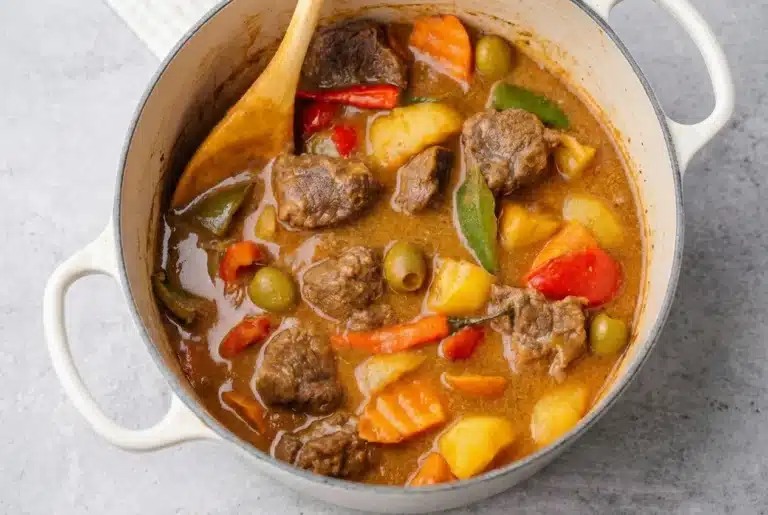
The Only Beef Caldereta Recipe You Will Ever Need — 7 Secrets to Rich, Thick Stew
This authentic recipe of caldereta beef delivers a rich, thick, deeply savory Filipino beef stew made with tender braised beef chuck, tomato sauce, liver spread, potatoes, carrots, bell peppers, and olives. Follow 7 professional secrets for a perfectly glossy, fall-apart beef caldereta that tastes even better the next day. Perfect for family dinners, fiestas, and special gatherings.
- Total Time: 0 hours
- Yield: 6 servings
Ingredients
- 1.5 kg beef chuck, cut into 2-inch cubes
- 3 tablespoons soy sauce
- 1 tablespoon calamansi juice (or lemon juice)
- 1 teaspoon ground black pepper
- 1 whole head garlic, minced (about 10 cloves)
- 2 large yellow onions, diced
- 3 tablespoons neutral cooking oil
- 400 g canned crushed tomatoes
- 250 ml tomato sauce (Filipino-style)
- 165 g canned liver spread (e.g., Reno or Clara Olé)
- 2 cups beef broth
- 2 tablespoons fish sauce
- 1 tablespoon sugar (optional, to balance acidity)
- 3 medium potatoes, cut into quarters
- 2 medium carrots, cut into thick rounds
- 1 large red bell pepper, sliced
- 1 large green bell pepper, sliced
- ¾ cup green olives, pitted
- 2–3 red chili peppers, sliced
- ½ cup grated quick-melt or cheddar cheese
Instructions
- Marinate the beef cubes with soy sauce, calamansi juice, and black pepper for at least 30 minutes. Pat completely dry before cooking.
- Heat oil in a heavy Dutch oven over high heat. Sear the beef in batches until deeply golden-brown on all sides (about 3–4 minutes per side). Do not overcrowd the pan. Set aside.
- In the same pot over medium heat, sauté the onions until soft and translucent (about 5–6 minutes). Add garlic and cook for 2 more minutes until fragrant.
- Add crushed tomatoes and scrape all the browned bits from the bottom of the pot. Cook for 5–7 minutes until the tomatoes deepen in color. Stir in the tomato sauce.
- Return the seared beef and all its juices to the pot. Add beef broth and fish sauce. Bring to a rolling boil, then reduce to a gentle simmer. Cover partially.
- Braise on low heat for 1½ to 2 hours, stirring every 20 minutes, until the beef is tender and easily pierced with a fork.
- Add potatoes and carrots. Cook uncovered for about 15 minutes until fork-tender. Stir in the liver spread in small spoonfuls until fully dissolved into the sauce.
- Add red and green bell peppers, olives, and chili peppers. Cook for 5–7 minutes until the peppers are slightly softened but still vibrant.
- Adjust seasoning with fish sauce, sugar, or chili to taste. Turn off the heat and stir in grated cheese until melted. Let rest for 5 minutes before serving.
Notes
– Beef chuck is the only recommended cut — it has the fat and collagen needed for a proper braise. Do not substitute with lean cuts. – Add liver spread only after the beef is tender — adding it too early dulls the flavor and reduces its thickening power. – This dish tastes dramatically better the next day. Make it 24 hours ahead for best results. – Remove potatoes before freezing — they become grainy after thawing. Add fresh potatoes when reheating. – For a pressure cooker: sear and build sauce as above, pressure cook on high for 35 minutes, natural release 15 minutes, then add vegetables and liver spread on sauté mode. – For a spicier version, add 1–2 tablespoons chili garlic sauce with the tomatoes and use bird’s eye chili.
- Prep Time: 20
- Cook Time: 150 (minutes)
- Category: Main Course
- Method: Braising
- Cuisine: Filipino